
Arizona Directional Drilling Contractor Insurance
See How We're Different:
or Call Us:(480) 526-3222
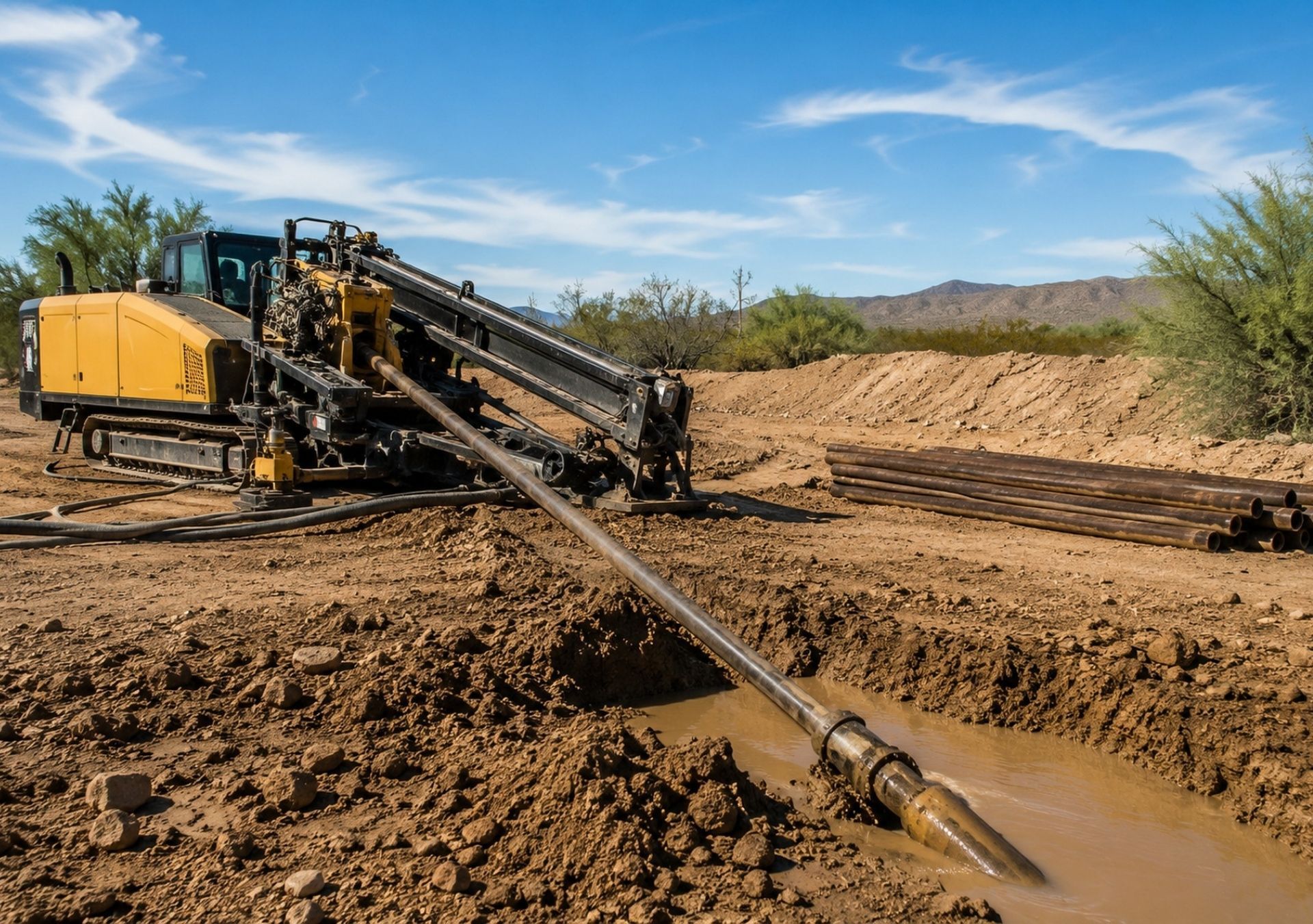
Arizona's directional drilling industry is booming. With the state investing heavily in broadband expansion, water infrastructure, and underground utility relocation, horizontal directional drilling (HDD) contractors face a growing volume of work - and a growing volume of risk. The global HDD market itself has been expanding steadily in recent years, and Arizona's construction pipeline reflects that trend. But working beneath the desert surface brings a distinct set of hazards that generic contractor insurance policies simply don't address.
If you're running a boring or directional drilling operation in Arizona, your insurance needs are more specialized than those of a typical general contractor. Between underground utility strikes, frac-outs in sensitive desert washes, and the sheer value of your guidance equipment, a single bad day can generate six-figure losses. This guide breaks down the specific coverage types you need, the endorsements that matter most, and the Arizona-specific requirements that can trip up even experienced operators. Whether you're a one-rig outfit or managing a fleet across multiple metro areas, understanding your insurance obligations is the first step toward protecting what you've built.
Risk Management for Arizona Horizontal Directional Drilling
Risk management for HDD contractors starts before any bore begins. You're working blind beneath the surface, relying on locating data that may be outdated and soil conditions that shift from one block to the next. Arizona's rapid development over the past two decades means underground infrastructure is dense in metro areas like Phoenix and Tucson, while rural corridors present their own challenges with unmarked irrigation lines and aging water mains.
Your risk profile is shaped by the type of work you take on. Fiber optic installations in established neighborhoods carry different exposure than large-diameter water main crossings under highways. A solid risk management approach involves pre-job utility locating verification, documented potholing procedures, and clear subcontractor agreements that define who carries what coverage.
Unique Hazards of Desert Soil and Underground Utilities
Arizona's caliche layers - hardened calcium carbonate deposits common throughout the Sonoran Desert - can cause drill heads to deflect unpredictably. When a bore path shifts, the risk of striking unmarked or mismarked utilities increases dramatically. Caliche also creates uneven resistance, which can stress tooling and increase the chance of a stuck product or collapsed bore hole.
Desert soils also behave differently with drilling fluid. Sandy, porous conditions can lead to inadvertent returns (frac-outs) far from the bore path, sometimes surfacing in landscaped yards, retention basins, or even protected riparian areas. The cleanup costs for a frac-out near a wash or canal can easily exceed $50,000, and environmental fines add another layer of financial exposure.
Underground utility density in Arizona's metro corridors is another persistent hazard. Gas, electric, telecom, and water lines often share narrow easements, and Arizona contractors face legal requirements around utility notification that must be followed precisely to avoid liability.
Arizona Registrar of Contractors (ROC) Bond Requirements
Every licensed contractor in Arizona must carry a surety bond through the Registrar of Contractors. For specialty contractors in the drilling and boring classification, the bond amount depends on your license class and annual volume. Residential contractors typically need a $10,000 bond, while commercial contractors may need $15,000 or more.
The ROC bond isn't insurance - it protects the public, not you. If a homeowner or project owner files a successful claim against your bond, you're personally liable to repay the surety company. That's why your bond and your insurance program need to work together. Many drilling contractors mistakenly believe their bond covers property damage claims, but it doesn't replace general liability or professional liability coverage. Arizona's
business insurance requirements extend well beyond bonding for contractors handling underground work.
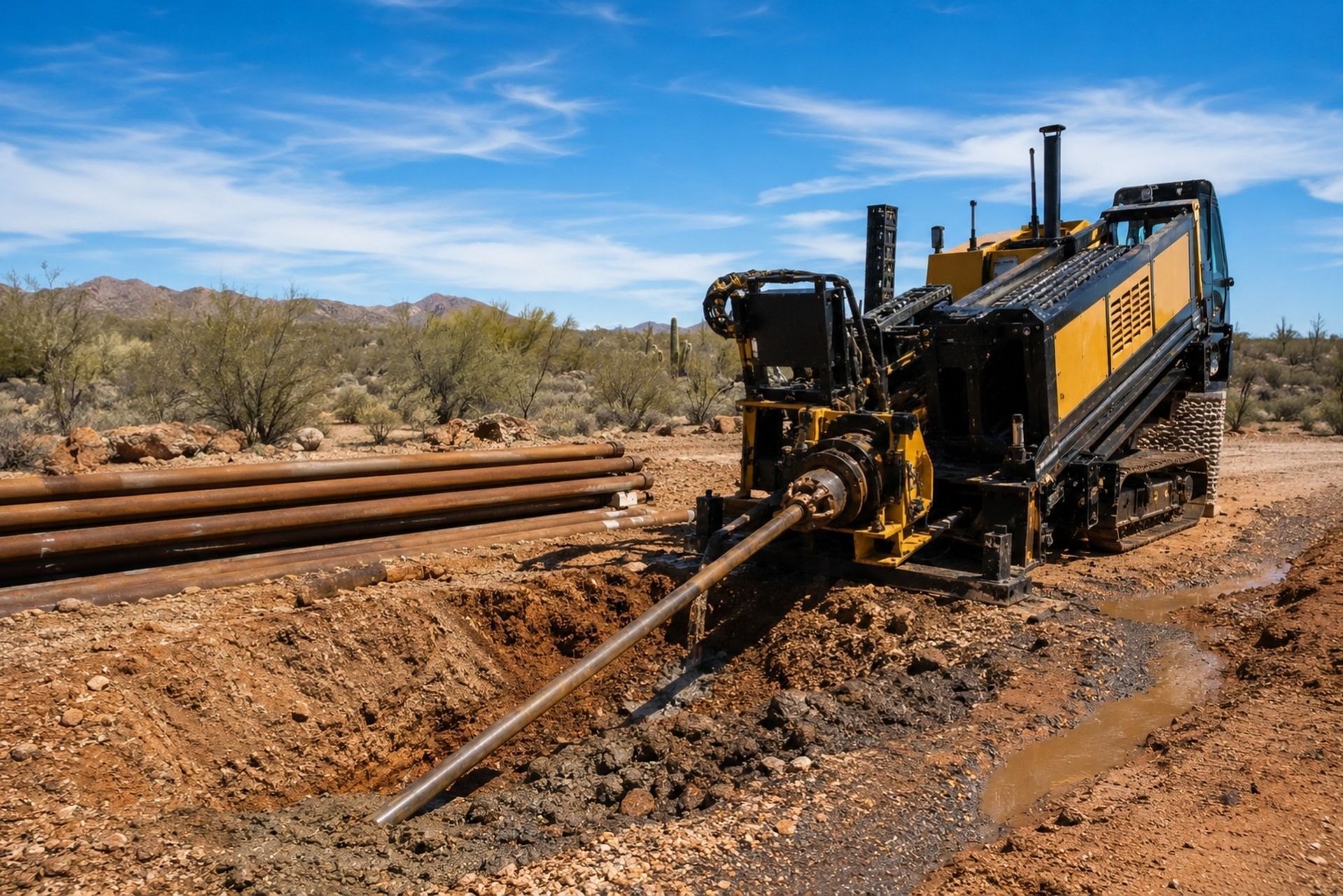
Core Coverage for Drilling Operations
Three coverage types form the backbone of any HDD contractor's insurance program: general liability, inland marine, and professional liability. Each one addresses a different category of risk, and gaps between them are where most claims fall through.
General Liability and Underground Property Damage
Commercial general liability (CGL) is your foundational policy. It covers third-party bodily injury and property damage arising from your operations. For directional drilling contractors, the critical component is the underground resources and equipment coverage, sometimes called "XCU" coverage (explosion, collapse, and underground).
Here's the catch: many standard CGL policies exclude underground property damage. If you strike a gas line during a bore and your policy has an underground exclusion, you're paying for that damage out of pocket. Make sure your CGL specifically includes XCU coverage, and confirm that the underground property damage exclusion has been removed. Policies for Arizona drilling contractors should reflect the specific risks tied to subsurface work, not just surface-level construction activities.
Typical CGL limits for HDD contractors range from $1 million per occurrence to $2 million aggregate, though many project owners and general contractors require higher limits or umbrella policies.
Inland Marine: Protecting Rigs and Guidance Systems
Your drilling rig, locating equipment, guidance systems, and downhole tooling represent a significant capital investment. A mid-size HDD rig can cost $300,000 to $800,000, and electronic guidance systems add another $30,000 to $100,000. Standard commercial property policies usually don't cover mobile equipment used at job sites.
Inland marine insurance fills that gap. It covers your equipment while it's in transit, on a job site, or stored at a yard. Pay attention to the valuation method - replacement cost coverage is far better than actual cash value, especially for specialized HDD equipment that depreciates quickly on paper but costs just as much to replace. You'll also want coverage for rented or leased equipment, since many contractors supplement their fleet with rented locators or vacuum excavation trailers.
Professional Liability for Design-Build Projects
If your company provides any design services - bore path engineering, utility routing recommendations, or installation specifications - you need professional liability coverage. This protects you when a design error leads to a failed installation, a utility conflict, or a project delay.
Standard CGL policies don't cover claims arising from professional services or design errors. A bore that's installed at the wrong depth because of a design calculation mistake isn't a "property damage" claim under your GL policy. It's a professional liability claim, and without the right coverage, you're exposed. This is especially relevant for contractors who handle turnkey fiber or pipeline projects where the client expects you to engineer and install.
Comparison: General Liability vs. Professional Liability
Understanding the difference between these two coverage types is essential for drilling contractors who do more than just operate a rig.
Table: Coverage Distinctions for Drillers
| Feature | General Liability (CGL) | Professional Liability (E&O) |
|---|---|---|
| What it covers | Bodily injury, property damage from operations | Errors in design, engineering, or professional advice |
| Typical claim example | Drill strikes unmarked gas line | Bore path design causes utility conflict |
| Underground damage | Covered (with XCU endorsement) | Not applicable |
| Design errors | Excluded | Covered |
| Required by GCs? | Almost always | Increasingly required for design-build |
| Typical limits | $1M/$2M | $500K to $2M |
| Claims trigger | Occurrence-based | Claims-made basis |
The key distinction: CGL responds to physical damage your work causes, while professional liability responds to financial harm caused by your professional judgment or recommendations. Many HDD contractors need both, particularly those
working on fiber optic installation projects where they're responsible for route design.
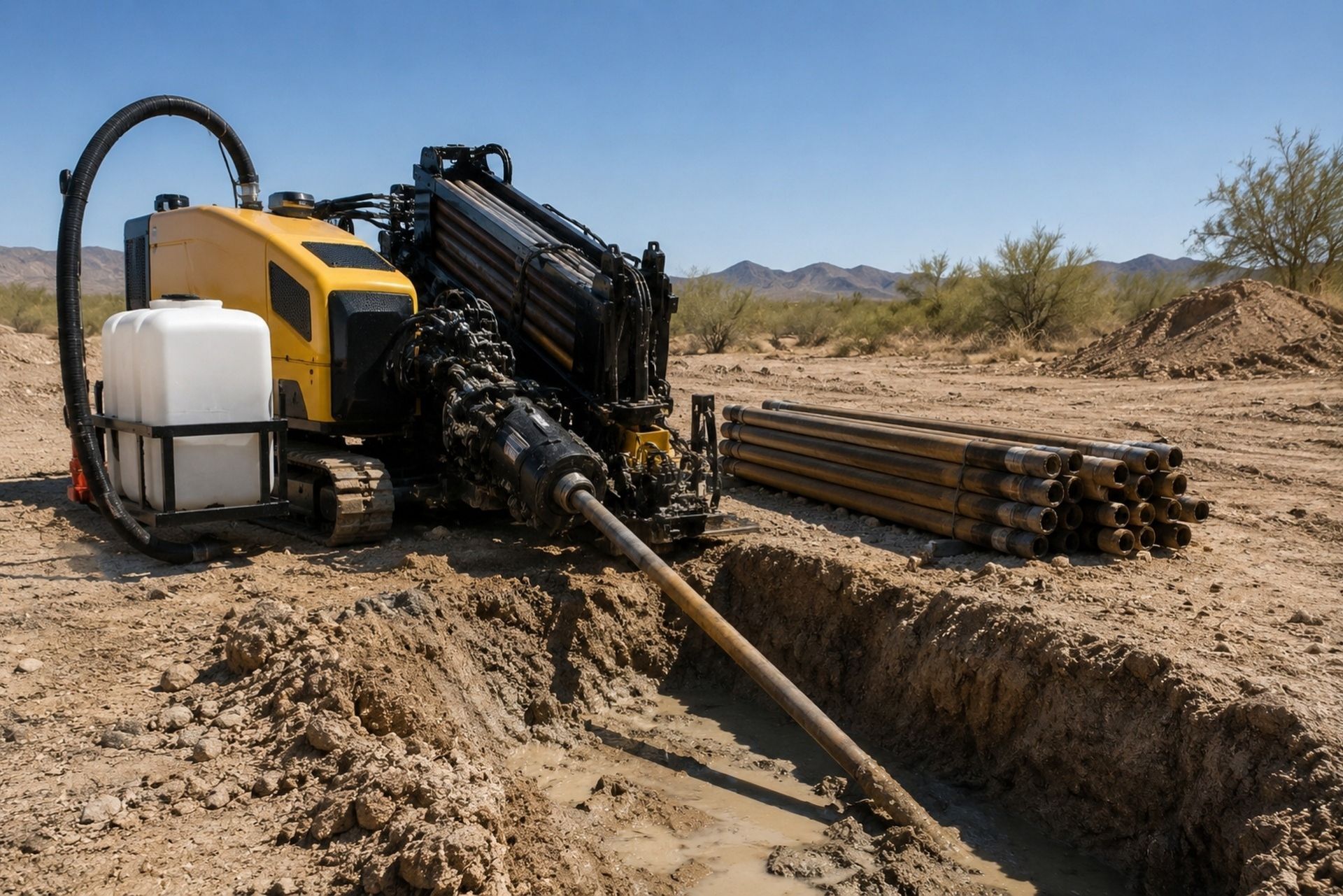
Specialized Endorsements for HDD Contractors
Beyond your core policies, several endorsements and add-ons address risks unique to directional drilling operations. These aren't optional extras - they're essential for contractors who want to avoid coverage gaps that show up at the worst possible time.
Pollution Liability and Inadvertent Return (Frac-Out)
Drilling fluid releases are one of the most common and expensive incidents in HDD work. A frac-out occurs when drilling fluid (bentonite slurry) escapes the bore hole and surfaces at an unintended location. In Arizona, frac-outs near desert washes, canals, or protected habitat areas can trigger environmental cleanup obligations and regulatory penalties.
Standard CGL policies exclude pollution-related claims. You need a separate pollution liability policy or a pollution endorsement added to your CGL. Make sure the policy specifically covers drilling fluid releases, not just fuel spills or chemical contamination. Some policies also cover the cost of third-party property cleanup when bentonite damages landscaping, driveways, or building foundations.
Insurance rate trends for drilling contractors in 2026 show that pollution liability premiums have increased as carriers recognize the frequency of frac-out claims, making it even more important to shop this coverage carefully.
Errors and Omissions in Utility Locating
If your crew performs any utility locating or potholing as part of your drilling operations, errors and omissions (E&O) coverage for locating services is critical. A missed locate that results in a utility strike creates liability that falls outside standard CGL coverage if the claim centers on your failure to accurately identify underground infrastructure.
This endorsement is especially relevant for contractors who self-perform locating rather than relying entirely on third-party locating services. Even if you use Blue Stake (Arizona 811), you may still face claims if your supplemental locating efforts miss a line. The E&O endorsement protects against claims that your professional locating services were negligent or incomplete.
Frequently Asked Questions
Do I need insurance beyond what Arizona's ROC requires? Yes. The ROC bond protects consumers, not your business. You'll need CGL, inland marine, and likely workers' compensation and auto coverage at minimum. Most general contractors won't let you on a job site without proof of CGL with adequate limits.
How much does insurance cost for a directional drilling contractor in Arizona? Premiums vary widely based on your revenue, crew size, equipment value, and claims history. A small HDD operation might pay $8,000 to $15,000 annually for a basic package, while larger firms with multiple rigs can pay $40,000 or more. Getting competitive quotes from Arizona-focused agencies helps you find the right balance of coverage and cost.
Is pollution liability really necessary if I only use bentonite? Absolutely. Bentonite slurry is classified as a pollutant under most CGL policies. A frac-out that damages a neighbor's property or enters a waterway won't be covered by your general liability policy without a pollution endorsement.
What happens if I hit an unmarked utility? Even if the utility was unmarked, you may still face claims. Your CGL policy (with XCU coverage) should respond, but the claims process can be complex. Document your Blue Stake ticket, pre-job photos, and any potholing you performed - this evidence is critical to your defense.
Should I carry professional liability if I don't do design work? If you strictly install per someone else's engineered plans and never provide design input, you may not need it. But if you ever recommend bore depths, suggest routing changes, or provide as-built documentation that others rely on, professional liability is worth carrying.
Securing Your Arizona Drilling Business
Running an HDD operation in Arizona means managing risks that most contractors never encounter. From caliche deflections to frac-outs in environmentally sensitive desert areas, the hazards are real and the financial consequences are significant. A comprehensive insurance program built around your actual operations - not a generic contractor template - is what separates businesses that survive a major claim from those that don't.
Start by reviewing your current policies against the coverage types outlined in this Arizona directional drilling and boring contractor insurance guide. Confirm that your CGL includes XCU coverage, your equipment is properly valued under an inland marine policy, and you have pollution liability that specifically addresses drilling fluid releases. If you're doing any design work, add professional liability before your next project.
The right insurance program won't just satisfy contract requirements or ROC obligations. It'll give you the confidence to bid on larger, more complex projects knowing that a single underground incident won't threaten everything you've worked to build. Talk to a broker who
specializes in drilling contractor coverage and understands Arizona's unique conditions. Your next bore is only as secure as the policy backing it.
About The Author:
Taylor Whatcott
As President of Wilde Wealth Insurance Services, I’m committed to providing trusted protection for both families and businesses across Arizona. Our independent team works with top-rated carriers to deliver tailored, comprehensive coverage—making insurance simple, accessible, and hassle-free.
Contact Us
Commercial Coverage Solutions
Protect Your Business with the Right Insurance
We offer customized insurance solutions to safeguard your business from financial risks. Our policies provide protection for property, employees, and liability concerns.
Commercial Property Insurance
Safeguards buildings, equipment, and inventory from damage or loss.
Professional Liability Insurance
Covers claims of negligence, errors, or omissions in services.
Cyber Liability Insurance
Protects against data breaches, cyberattacks, and online threats.
Who We Protect
Insurance Solutions for Your Industry
We specialize in providing tailored coverage for businesses in key industries. Our policies are designed to meet industry-specific risks and ensure complete protection.


Protection for Your Home & Assets
Reliable Coverage for Life’s Unexpected Moments
We provide personal insurance solutions designed to safeguard your home, vehicle, and financial well-being. Our policies ensure you and your loved ones are protected.







What Our Clients Say
Real Feedback. Real Confidence.
FAQs
Answers to Common Insurance Questions
How do I know which insurance coverage is right for me?
Choosing the right insurance depends on your personal or business needs. Our team evaluates your risks and recommends tailored coverage to protect what matters most.
We work with multiple carriers to provide different policy options. This allows you to compare benefits, limits, and pricing to make an informed choice.
If you’re unsure, we’ll walk you through the options step by step, ensuring you understand your coverage and feel confident in your decision.
Why should I choose an independent insurance agency like Wilde Wealth?
As an independent agency, we are not tied to a single insurance provider. This means we can compare multiple policies to find the best coverage at the best price.
Our goal is to advocate for you, ensuring you receive personalized service and expert advice tailored to your situation.
Unlike direct insurers, we offer ongoing support, helping you with claims, policy changes, and future coverage needs.
Can I bundle multiple insurance policies to save money?
Yes! Bundling policies like home and auto can lead to significant savings. Many carriers offer discounts for combining multiple coverages.
Bundling also simplifies policy management, with a single point of contact and streamlined renewals.
We help you explore bundling options to ensure you get the best value while maintaining the protection you need.
What factors affect my insurance rates?
Insurance rates are influenced by factors such as coverage limits, location, claims history, and risk exposure. Personal insurance may consider credit scores, driving history, and home value.
For businesses, factors like industry type, employee count, and annual revenue can impact pricing. Each carrier evaluates risk differently.
We shop multiple providers to find the best balance of coverage and cost, ensuring you don’t overpay while staying fully protected.
How does Wilde Wealth Insurance Services help business owners?
We provide customized business insurance solutions to protect against liability, property damage, employee-related risks, and cyber threats.
Our team works with a range of industries, including contractors, restaurants, and real estate professionals, to offer tailored policies.
From small startups to established enterprises, we help business owners minimize risks and keep operations running smoothly.
What happens if I need to file a claim?
Filing a claim is simple with our support. Contact us first, and we’ll guide you through the process, ensuring all necessary information is submitted correctly.
We work directly with your insurance carrier to expedite the claim, keeping you informed at every step.
Our team is here to advocate for you, making sure you receive a fair and timely resolution.
Latest Articles & Insights
Stay Informed with Expert Insurance Advice
We provide valuable insights to help you make informed insurance decisions. Explore our latest articles on coverage options, industry trends, and risk management tips.

Contact Us