
Arizona Stone Countertop Fabricator Contractor Insurance
See How We're Different:
or Call Us:(480) 526-3222
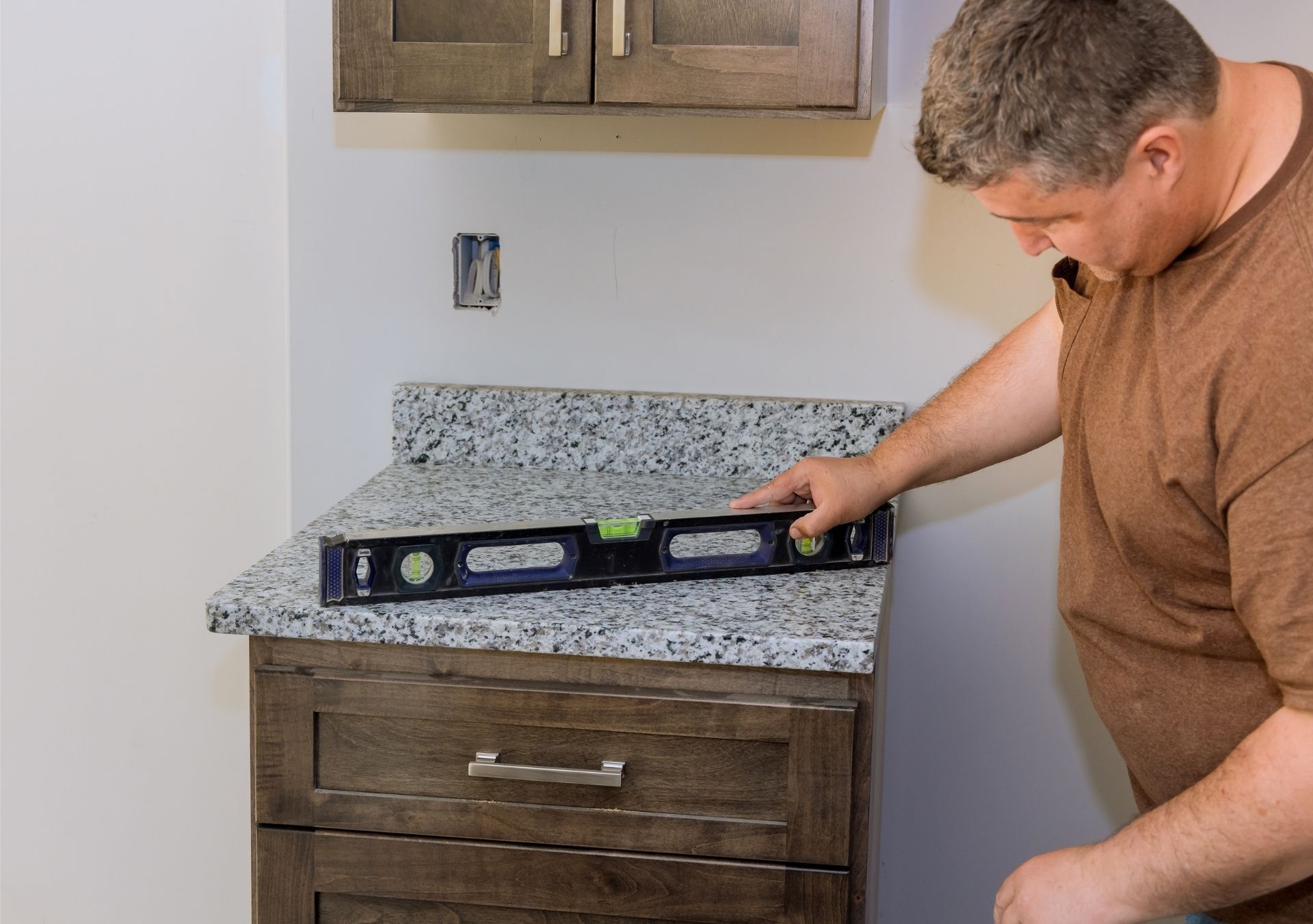
Running a stone countertop fabrication business in Arizona means working with heavy slabs, sharp cutting tools, and expensive materials every single day. One cracked granite slab during transit, one employee injury from a saw, or one improperly measured kitchen install can cost you thousands - sometimes tens of thousands. The right insurance coverage isn't just a box to check for licensing; it's what keeps your shop doors open when something goes wrong.
This insurance guide for Arizona stone countertop fabricators breaks down the specific policies you need, what the state requires, and how to avoid the coverage gaps that catch too many shop owners off guard. Whether you're a two-person operation cutting quartz in a small warehouse or a large fabrication company running CNC machines and multiple install crews, your risk profile is unique to this trade.
Stone fabrication combines manufacturing, transportation, and on-site installation - three distinct risk categories that most
generic contractor policies don't fully address. The market itself is unpredictable, with industry observers noting that
up-and-down months have become the new normal for countertop businesses. That volatility makes proper coverage even more critical. Getting this right from the start saves you money and protects the business you've built.
Essential Insurance Policies for Arizona Stone Fabricators
Your insurance portfolio needs to cover three distinct phases of your work: fabrication in the shop, transportation of finished slabs, and installation at the customer's home or commercial site. Each phase carries different risks, and a single policy rarely covers all of them adequately.
Most fabricators start with general liability and workers' comp, which is a solid foundation. But the gaps between those policies are where costly claims hide. A $15,000 marble countertop that cracks during templating isn't covered by general liability - that's a professional liability issue. A slab that falls off your truck on the I-10 requires inland marine or commercial auto coverage, depending on the circumstances. Understanding these distinctions is the difference between filing a covered claim and paying out of pocket.
General Liability for Job Site Accidents
General liability insurance is your first line of defense against third-party claims. If your installer scratches a customer's hardwood floor, damages kitchen cabinets during a countertop removal, or if a visitor trips over equipment at your fabrication shop, this policy responds.
For Arizona contractors, a general liability policy with $1 million per occurrence and $2 million aggregate limits typically costs between $750 and $2,000 annually. Phoenix-based contractors specifically can expect to pay around $142 per month for those standard coverage limits. The cost depends heavily on your claims history, number of employees, and annual revenue.
One common mistake: assuming general liability covers damage to the countertop itself. It doesn't. GL covers damage to other people's property and bodily injuries - not your own work product. That's a separate coverage need entirely.
Professional Liability and Errors and Omissions
Professional liability, often called errors and omissions (E&O), covers claims arising from mistakes in your professional services. For stone fabricators, this means faulty measurements, incorrect material specifications, or design errors that result in financial loss for your client.
Picture this: you template a kitchen, fabricate a $9,000 quartzite countertop, and discover during installation that the measurements were off by half an inch. The slab is unusable. Without E&O coverage, that's your loss entirely. This policy also protects you if a client claims you recommended an unsuitable stone type for a high-heat application and it cracks.
E&O premiums for specialty contractors typically range from $500 to $2,500 annually, depending on your revenue and the scope of design services you offer.
Commercial Property and Inland Marine Coverage
Your fabrication shop likely contains hundreds of thousands of dollars in equipment: CNC machines, bridge saws, polishers, edge profilers, and raw material inventory. Commercial property insurance covers these assets against fire, theft, vandalism, and certain natural disasters.
Inland marine coverage fills a critical gap that standard property insurance leaves open. It protects materials and equipment while they're in transit or temporarily stored at a job site. That $20,000 slab of Calacatta marble sitting on your A-frame in a customer's garage overnight? Standard property insurance won't cover it there. Inland marine will.
| Coverage Type | What It Covers | What It Doesn't Cover |
|---|---|---|
| General Liability | Third-party injuries, damage to others' property | Your own work product, employee injuries |
| Professional Liability (E&O) | Measurement errors, design mistakes, bad recommendations | Physical damage to job sites |
| Commercial Property | Shop equipment, inventory at your location | Materials in transit or at job sites |
| Inland Marine | Materials and tools in transit or off-site | Permanent shop equipment, third-party claims |
Arizona State Requirements and ROC Compliance
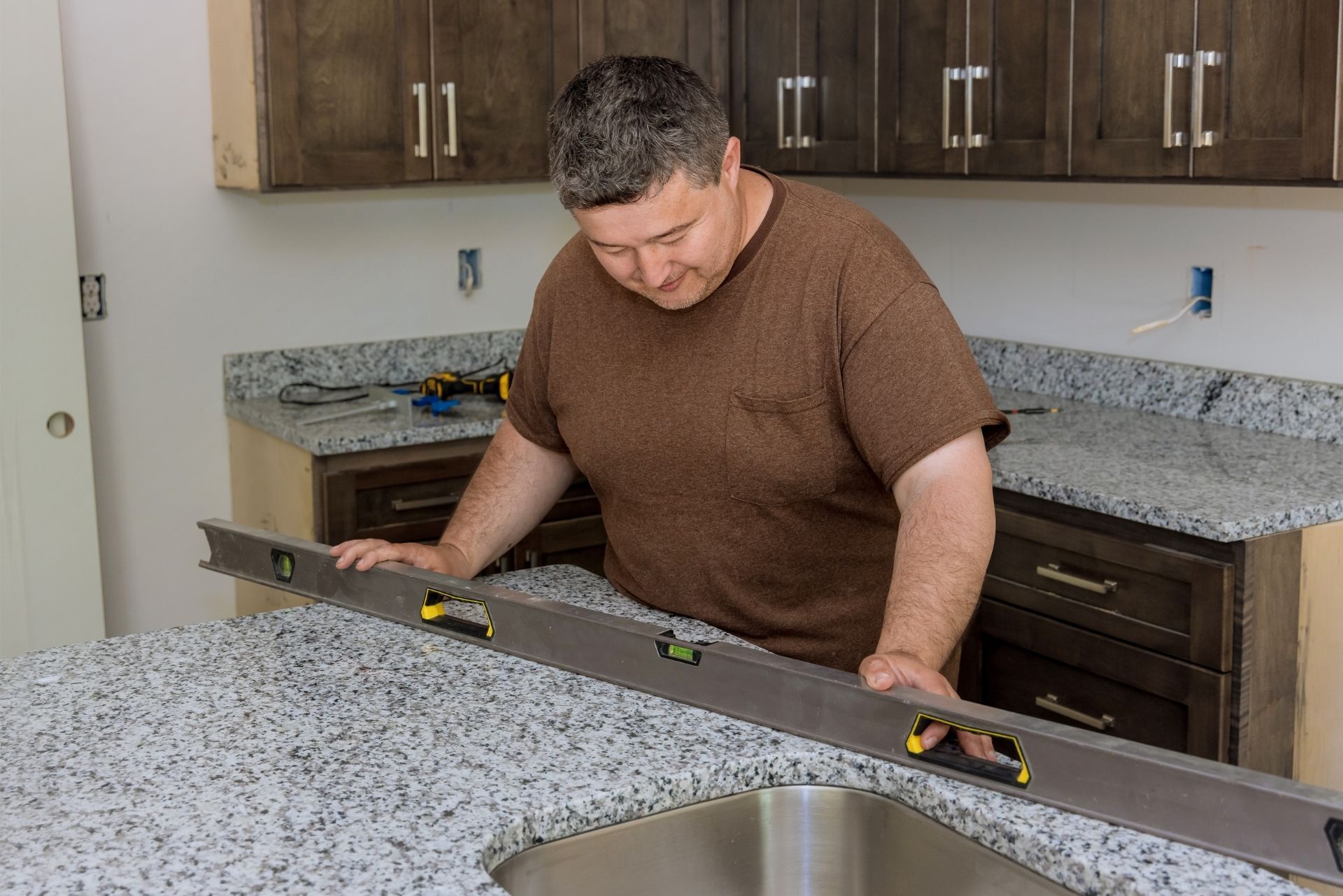
Arizona's Registrar of Contractors (ROC) has specific insurance and bonding requirements that you must meet before you can legally operate. Failing to maintain these requirements can result in license suspension, fines, and an inability to pull permits.
Your ROC license classification matters here. Most stone countertop fabricators and installers fall under a specialty contractor classification. The state requires proof of insurance at the time of licensing and during renewal. Lapsed coverage triggers automatic notifications to the ROC, so you can't let policies expire and hope nobody notices.
Workers' Compensation for Fabrication Shops
Arizona doesn't give you a choice on this one. The state mandates workers' compensation insurance for nearly all businesses with employees, regardless of how many people you employ. Even if you have just one part-time helper, you need coverage.
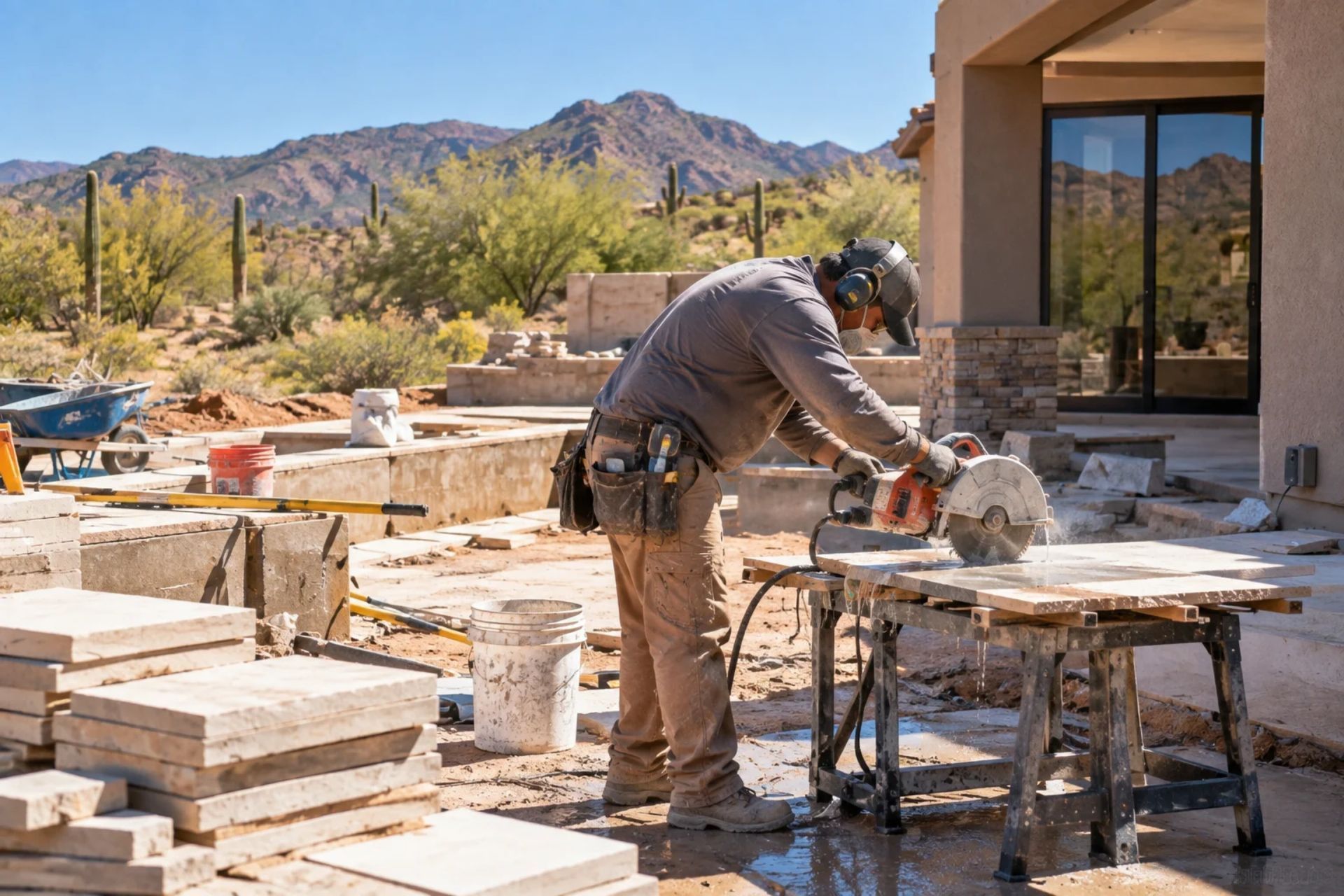
For stone fabrication shops, workers' comp is especially important because the work is inherently dangerous. Employees operate heavy machinery, lift slabs weighing hundreds of pounds, and work with silica-producing materials daily. Workers' comp premiums for contractors in Phoenix average about $318 per month, or $3,811 annually. Your actual rate depends on your experience modification factor, payroll size, and claims history.
Sole proprietors and LLC members can exempt themselves from workers' comp in Arizona, but doing so means you have zero coverage if you're personally injured on the job. Most lenders and general contractors require proof of workers' comp regardless of exemption status.
Surety Bonds for Arizona Registrar of Contractors
Every licensed Arizona contractor must maintain a surety bond. The bond amount varies based on your license classification and the dollar volume of work you perform. For most residential specialty contractors, the minimum bond starts at $2,500 but can increase significantly for higher-volume operations.
A surety bond isn't insurance for you - it's a financial guarantee for your customers. If you fail to complete a project or violate your contract, the customer can file a claim against your bond. You're then responsible for repaying the surety company. Think of it as a credit line that protects consumers, not your business.
Industry-Specific Risks in Stone Countertop Installation
Stone fabrication carries risks that most general contractor policies weren't designed to address. Two stand out above the rest: silica dust exposure and transit damage. Both can generate claims that threaten the financial health of your business.
Silica Dust Exposure and Health Liability
Cutting, grinding, and polishing engineered quartz and natural stone releases respirable crystalline silica. OSHA's permissible exposure limit is 50 micrograms per cubic meter over an eight-hour shift, and enforcement has intensified in recent years. Workers who develop silicosis or other respiratory conditions from occupational silica exposure can file claims that extend well beyond standard workers' comp.
Your liability exposure increases if you can't document proper dust controls: wet cutting, ventilation systems, respiratory protection programs, and air monitoring. Insurers look at these safety measures when underwriting your policy, and a lack of documented protocols can lead to denied claims or policy cancellations.
Transit and Installation Damage Protection
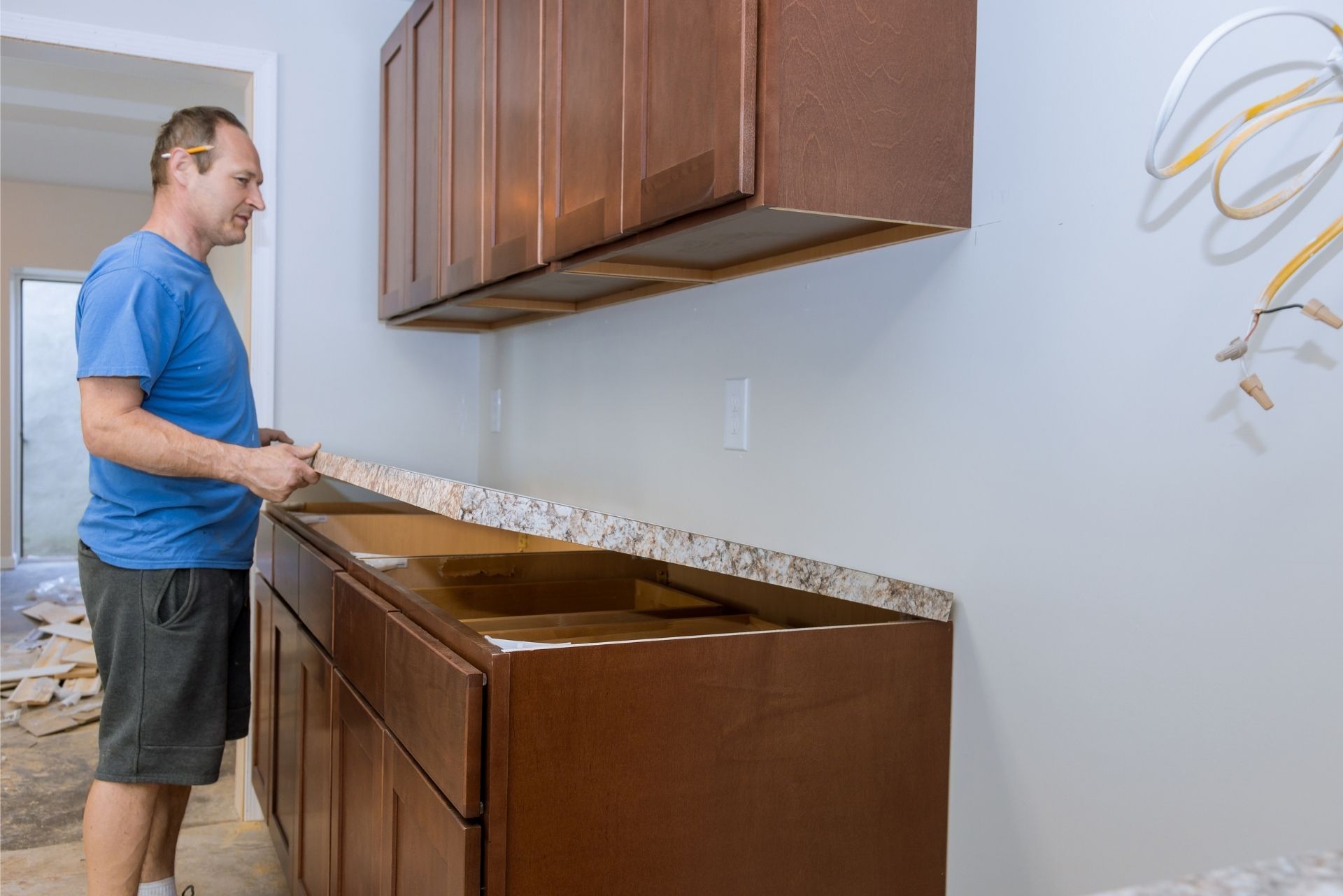
Moving finished countertops from your shop to the job site is one of the riskiest parts of the business. A sudden stop, an improperly secured slab, or a rough road can crack or chip a finished piece worth thousands.
Inland marine coverage handles most transit damage scenarios, but you need to verify your policy limits match the value of materials you're transporting. Many fabricators carry $50,000 to $100,000 in finished product on a single truck run. If your inland marine limit is $25,000, you're self-insuring the difference.
Commercial Auto Insurance for Slab Transportation
Your personal auto policy won't cover vehicles used for business purposes, and Arizona requires commercial auto insurance for any vehicle used in commercial operations. For stone fabricators, this means your box trucks, flatbeds, and even the work vans your installers drive to job sites.
Commercial auto covers liability if your driver causes an accident, physical damage to your vehicles, and injuries to your employees while driving. Given that you're hauling heavy stone slabs on Arizona highways where summer heat can affect tire integrity and road conditions, adequate liability limits are essential. Most fabricators carry at least $1 million in commercial auto liability, though contracts with builders and general contractors sometimes require higher limits.
Hired and non-owned auto coverage is worth adding if employees ever use personal vehicles for business errands, like picking up supplies or meeting clients at job sites.
Your premiums aren't arbitrary numbers. Insurers use specific data points to calculate your risk, and understanding these factors gives you some control over what you pay.
Safety Protocols and Risk Management Strategies
Documented safety programs directly reduce your premiums. Insurers want to see written safety policies, regular employee training records, equipment maintenance logs, and OSHA compliance documentation. A shop with wet-cutting stations, proper ventilation, and a formal silica exposure control plan will pay less than one without these measures.
Your experience modification rate (EMR) is the single biggest factor in workers' comp pricing. An EMR below 1.0 means you have fewer claims than average and translates to lower premiums. An EMR above 1.0 means the opposite. Every workplace injury claim pushes this number up for three years.
Business Scale and Annual Revenue Impacts
Revenue is a primary rating factor for general liability insurance. Contractors with annual revenues exceeding $1 million can expect to pay 30-50% more than those with revenues under $500,000. This makes sense from an underwriting perspective: more revenue usually means more jobs, more employees, and more opportunities for something to go wrong.
The number of employees, your payroll total, and the types of jobs you take on all influence pricing. A fabricator doing primarily residential kitchen countertops has a different risk profile than one installing commercial lobby features in high-rise buildings.
How to Select the Right Insurance Provider
Not all insurance agents understand the stone fabrication industry. You want a broker or agent who has experience with specialty contractors and understands the difference between a CNC bridge saw and a hand grinder - because those distinctions affect your coverage needs.
Get quotes from at least three providers, but don't just compare premiums. Compare coverage terms, exclusions, deductibles, and the insurer's claims handling reputation. A cheaper policy with broad exclusions for silica-related claims or transit damage isn't saving you money; it's creating a false sense of security.
Ask potential providers these questions: Do they offer a business owner's policy (BOP) that bundles GL, property, and inland marine? Can they write your surety bond in-house? Do they have experience with ROC compliance requirements? The answers will tell you quickly whether they understand your business.
Frequently Asked Questions
Do I need insurance to get an Arizona ROC contractor's license? Yes. The ROC requires proof of general liability insurance and a surety bond before issuing or renewing your license. Workers' comp is also required if you have employees.
How much does general liability cost for a small fabrication shop? For a small operation, expect to pay between $750 and $2,000 per year for standard $1M/$2M limits. Your exact cost depends on revenue, claims history, and number of employees.
Does general liability cover a countertop I damage during installation? No. General liability covers damage to the customer's property, not your own work product. You'd need inland marine or an installation floater to cover the countertop itself.
Can I exempt myself from workers' comp as a sole proprietor? Arizona allows sole proprietors and certain LLC members to opt out, but many general contractors and commercial clients require proof of coverage regardless.
What's the difference between inland marine and commercial auto coverage? Commercial auto covers accidents and liability involving your vehicles. Inland marine covers the materials and equipment being transported, regardless of the vehicle.
Making the Right Choice for Your Fabrication Business
Protecting your Arizona stone countertop fabrication business requires more than a single policy. You need a layered approach that covers your shop, your people, your materials in transit, and your work at the customer's site. Start with the state requirements - workers' comp, general liability, and your surety bond - then build outward based on your specific risks.
Review your coverage annually, especially as your revenue grows or you add employees. A policy that fit your business two years ago might leave dangerous gaps today. Work with an agent who knows the construction trades, document your safety programs, and treat insurance as a core business expense rather than an afterthought. The cost of proper coverage is always less than the cost of an uncovered claim.
About The Author:
Taylor Whatcott
As President of Wilde Wealth Insurance Services, I’m committed to providing trusted protection for both families and businesses across Arizona. Our independent team works with top-rated carriers to deliver tailored, comprehensive coverage—making insurance simple, accessible, and hassle-free.
Contact Us
Commercial Coverage Solutions
Protect Your Business with the Right Insurance
We offer customized insurance solutions to safeguard your business from financial risks. Our policies provide protection for property, employees, and liability concerns.
Commercial Property Insurance
Safeguards buildings, equipment, and inventory from damage or loss.
Professional Liability Insurance
Covers claims of negligence, errors, or omissions in services.
Cyber Liability Insurance
Protects against data breaches, cyberattacks, and online threats.
Who We Protect
Insurance Solutions for Your Industry
We specialize in providing tailored coverage for businesses in key industries. Our policies are designed to meet industry-specific risks and ensure complete protection.



Protection for Your Home & Assets
Reliable Coverage for Life’s Unexpected Moments
We provide personal insurance solutions designed to safeguard your home, vehicle, and financial well-being. Our policies ensure you and your loved ones are protected.







What Our Clients Say
Real Feedback. Real Confidence.
FAQs
Answers to Common Insurance Questions
How do I know which insurance coverage is right for me?
Choosing the right insurance depends on your personal or business needs. Our team evaluates your risks and recommends tailored coverage to protect what matters most.
We work with multiple carriers to provide different policy options. This allows you to compare benefits, limits, and pricing to make an informed choice.
If you’re unsure, we’ll walk you through the options step by step, ensuring you understand your coverage and feel confident in your decision.
Why should I choose an independent insurance agency like Wilde Wealth?
As an independent agency, we are not tied to a single insurance provider. This means we can compare multiple policies to find the best coverage at the best price.
Our goal is to advocate for you, ensuring you receive personalized service and expert advice tailored to your situation.
Unlike direct insurers, we offer ongoing support, helping you with claims, policy changes, and future coverage needs.
Can I bundle multiple insurance policies to save money?
Yes! Bundling policies like home and auto can lead to significant savings. Many carriers offer discounts for combining multiple coverages.
Bundling also simplifies policy management, with a single point of contact and streamlined renewals.
We help you explore bundling options to ensure you get the best value while maintaining the protection you need.
What factors affect my insurance rates?
Insurance rates are influenced by factors such as coverage limits, location, claims history, and risk exposure. Personal insurance may consider credit scores, driving history, and home value.
For businesses, factors like industry type, employee count, and annual revenue can impact pricing. Each carrier evaluates risk differently.
We shop multiple providers to find the best balance of coverage and cost, ensuring you don’t overpay while staying fully protected.
How does Wilde Wealth Insurance Services help business owners?
We provide customized business insurance solutions to protect against liability, property damage, employee-related risks, and cyber threats.
Our team works with a range of industries, including contractors, restaurants, and real estate professionals, to offer tailored policies.
From small startups to established enterprises, we help business owners minimize risks and keep operations running smoothly.
What happens if I need to file a claim?
Filing a claim is simple with our support. Contact us first, and we’ll guide you through the process, ensuring all necessary information is submitted correctly.
We work directly with your insurance carrier to expedite the claim, keeping you informed at every step.
Our team is here to advocate for you, making sure you receive a fair and timely resolution.
Latest Articles & Insights
Stay Informed with Expert Insurance Advice
We provide valuable insights to help you make informed insurance decisions. Explore our latest articles on coverage options, industry trends, and risk management tips.

Contact Us